John Cougar Mellencamp’s outspoken liberalism has surprised many casual fans, politicians, and country music stars who have misunderstood his populist lyrics as patriotic bravado. Over time, he has faced criticism telling him to stick to music, leading to restrictions on commenting on his social media accounts.
Throughout the Reagan era and beyond, Mellencamp’s anti-racist, pro-farmer, anti-capitalist rants were provocative and challenging. He has consistently reminded Americans, often using strong language, that musicians have a role in politics.
Before embracing leftist causes, Mellencamp faced a critical moment in the early ’80s when he realized that commercial success depended on radio play, which required a more polished sound than his previous albums. Despite this, his breakthrough album, "American Fool," was infused with deeper meaning and rebellion.
Growing up in Seymour, Indiana, Mellencamp drew inspiration from his surroundings and the struggles of his family and rural neighbors, celebrating and critiquing agrarian ideals in his music. Songs like "Jack & Diane" resonated with fans for their depiction of youthful love and defiance against societal norms.
While Tastee-Freez, a symbol of Middle American culture, was not part of Mellencamp’s childhood, its mention in "Jack & Diane" highlighted his focus on celebrating ordinary people in small towns. The song’s success in 1982 catapulted Mellencamp to the top of the charts, solidifying his place in music history. Upon its release, it overtook Fleetwood Mac’s Mirage as the top album, a symbol of excessive pop production that stood in contrast to the raw essence of heartland rock. The first single from American Fool, “Hurts So Good,” co-written with Mellencamp’s childhood friend George Green, portrayed a pre-AIDS crisis era of carefree indulgence. However, “Jack & Diane” went beyond this, showcasing a deeper sense of heart and rural perspective that became synonymous with the singer. Mellencamp’s choice to connect with the working-class demographic during a time of economic turmoil was a bold move.
In the original demos of “Jack & Diane,” Jack was portrayed as a young Black man and Diane as white. This interracial element of the song was rediscovered during archival research for Mellencamp’s career retrospective box set, On the Rural Route 7609. Grammy-winning producer Steve Berkowitz, who worked closely with Mellencamp during this research, uncovered the song’s origins and the evolution of its lyrics. The song’s roots can be traced back to a demo from the late ‘70s titled “Jenny at 16,” which later transformed into “Jack & Diane” during the American Fool sessions.
While the original demos featured Mellencamp singing “Jack was Black…Diane was white,” this line was ultimately excluded from the studio version of “Jack & Diane” released on American Fool. Mellencamp has attributed this edit to pressures from the record label and his own desire to avoid further controversy during the album’s tumultuous production.
Mellencamp’s personal connection to race and diversity, including his interactions with Black friends and interracial couples during his youth in Indiana, underscored his desire to celebrate all people in small towns through his music. His early experiences performing in a racially diverse cover band called Crape Soul provided him with valuable insights into both music and prejudice. Despite facing racial tensions and hostility from some audiences, Mellencamp’s time in the band shaped his understanding of race relations and informed his artistic choices later in his career. Un défenseur de l’égalité raciale : John Mellencamp
Le combat pour l’égalité
Lorsqu’ils quittaient la scène, les enfants blancs pouvaient rester à l’intérieur du bâtiment, mais Fred et tous les autres devaient sortir. Alors je suis simplement sorti avec eux.
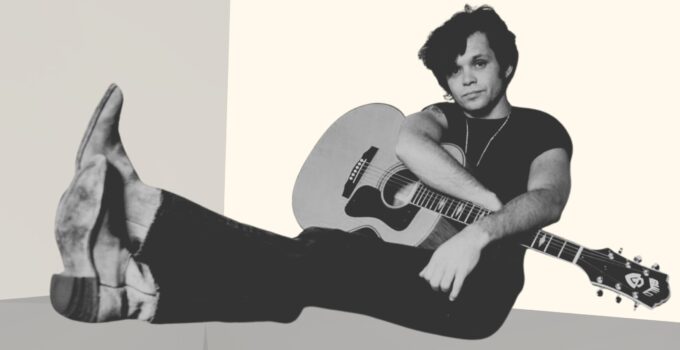
Au fil des ans, Mellencamp est devenu de plus en plus vocal sur ses positions antiracistes. En 1983, il a sorti "Pink Houses", une chanson sur la ségrégation raciale et les inégalités plus largement, dont le refrain "Ain’t that America" a été rapidement pris à tort pour une expression de patriotisme bon marché. Un an plus tard, en 1984, il a commencé à intégrer l’hymne antiraciste de Bob Dylan, "The Lonesome Death of Hattie Carroll", dans ses concerts. Tout au long des décennies suivantes, Mellencamp a sorti des clips musicaux montrant des amitiés et amours interraciaux, et a souvent dénoncé l’héritage persistant du racisme en Amérique. En 2008, il a sorti "Jena", une chanson protestant contre le procès des soi-disant Jena Six en Louisiane. (Au début des années 90, il a gravé l’inscription "fuck racism" sur le corps de sa guitare acoustique Gibson Dove.)
Engagement antiraciste
Lorsque le président Barack Obama a été élu pour son premier mandat en 2008, Mellencamp s’est produit lors du concert inaugural "We Are One" à la Lincoln Memorial. Il a également chanté la chanson folklorique traditionnelle "Keep Your Eyes on the Prize" lors de la célébration de la musique du mouvement des droits civiques à la Maison Blanche d’Obama. "C’est à ce moment de ma vie que j’ai appris comment la haine peut vraiment affecter les gens", a-t-il expliqué à l’auditoire avant la chanson, faisant référence à son temps dans le Crepe Soul, où il a été témoin du racisme et de la discrimination visant ses camarades de groupe noirs.
Un porte-parole engagé
"Je pense que John Cougar est le meilleur porte-parole de notre époque. Ce gars ne rigole pas", a déclaré le musicien Steve Wynn, leader du célèbre groupe paisley underground de Los Angeles, The Dream Syndicate, à un journaliste du magazine Creem en 1983. "John Cougar est un meilleur porte-parole de notre époque que n’importe quel groupe de critiques d’art. Je veux dire, qu’est-ce que Gang of Four a fait pour le cœur de l’Amérique que John Cougar n’a pas fait?"
Réflexions et audace
En réfléchissant au risque de son album de 1982 et à son esprit populiste de gauche, Mellencamp a demandé : "Imaginez si American Fool avait été mauvais? Je veux dire, avec un titre comme ça, j’aurais pu être crucifié", a-t-il dit. "Mais le nom original était encore pire… le nom de cet album aurait été ‘Je peux avoir l’air idiot, mais j’ai quand même un boulot’."
Conclusion
John Mellencamp incarne un artiste engagé dans la lutte pour l’égalité et la justice raciale, utilisant sa musique et sa voix pour défendre ces valeurs fondamentales. Son parcours artistique et son militantisme en font un symbole important de la lutte contre le racisme aux États-Unis.