I.
When he first lays eyes on it, something inside him is stirred. An indescribable excitement washes over him.
The mountain stands tall before him. Sheer rock walls covered in snow, with patches of limestone sparkling in the sunlight. Nearly twelve thousand feet above sea level—11,752 to be precise—but more importantly, seven thousand feet above where the young man is standing. He feels compelled to move, his feet carrying him forward, climbing towards the towering giant. Cutting through a meadow of sage and sumac, he finds himself below a wall of rock adorned with aspen trees, their yellow leaves turning orange. He quickens his pace, almost running.
Pausing to watch the dance of cloud shadows on the mountain’s face, his spirits lift with the terrain. As he approaches a rock wall, he notices flowing water. A constant stream cascading down the rock’s crevices, splashing below. Mesmerized by the various shelves and falls of water, he tries to imprint the image in his mind. The white rock stained orange from the perpetual moisture. The melodic sound of the falling water fills his ears. With his head down, the song is a steady roar, but with his head up, it takes on a higher pitch.
He will later learn that the mountain is named Timpanogos, after the people who lived nearby five centuries ago. The name roughly translates to « rock » or « river, » or in some interpretations, « rock river » or « rocky torrent. » While he will eventually grasp the meaning of the word, it will take time for him to understand what Timpanogos will signify for him. How could he have known? His future is uncertain, laid out before him. A vague intuition tells him that this place will hold significance, but nothing more.
All his confusion and anger dissipate in that moment. A whimsical thought crosses his mind. Life suddenly feels grander. The insignificance he felt back in L.A., where his stern father resides, fades away. The uncertainty of his year at college in Boulder, the disdain for academics, the drinking, the lack of direction, the early attempts at art—all quiet down.
Simultaneously, a twinge of desire stirs within him. The human impulse to possess the place, to make it his own. But then, a better notion emerges. To stand in awe of its beauty. Simply to admire, without any ulterior motive. It’s not exactly awe, that overused word that often lacks substance. It’s about being engulfed in something greater than oneself. Something exhilarating and untamed, immense and wild. This moment will stay etched in his memory. A moment that will alter the course of his life.
He stumbled upon this place by chance, while driving back to L.A. from the University of Colorado. Reflecting later, he will say: « It was so breathtaking that I couldn’t tear myself away. Timpanogos, the mountain, felt like Everest to me. It was Yosemite on a different scale. Spiritually, it was captivating. When I left, I couldn’t shake it off. I lay in bed, thinking about it. And whenever I had the chance to return, I did. It became my favorite scenic route, the only way back home. I distinctly remember thinking, Someday I’d like to stake a claim here. »
The year is 1954, and the young man’s name is Robert Redford. A few years later, he will indeed stake his claim by purchasing two acres near the mountain for $500.
II.
Sixty-two years later, in December 2016, I was invited to do a reading at Sundance. My entire family was invited, and my wife Nina, daughter Hadley, and I were thrilled to be there. Although Robert Redford was expected to attend, he was absent. Nevertheless, it was a fantastic week.
There was a certain ambiance at Sundance. Despite Redford’s absence, his presence lingered in every corner, a celebrity buzz electrifying the atmosphere. The essence of Bob. In the evenings, Nina and I retreated to the Owl Bar after skiing. The historic bar, relocated from Thermopolis, Wyoming, where it was reputedly frequented by Butch Cassidy, was now nestled in Sundance. The bartender informed me that Bob’s drink of choice was tequila, so tequila it was.
I wish I could recall the bartender’s name. One night, I entered the bar alone, finding only him there. I struck up a conversation, recounting why I was there and how Robert Redford had unexpectedly reached out to praise a book I had written. The bartender seemed unimpressed by my encounter with Bob. It was routine for him.
He shared the tale of how Bob had discovered Sundance. Throughout the week, I heard variations of the same story from Chad, the Sundance manager at the time, and a woman who approached me after my reading. It seemed as integral to the place as the limestone crags on Mount Timpanogos. I recognized it for what it was.
An origin tale.
III.
It happened one afternoon driving home from college.
Since he was born in Los Angeles, Robert Redford did not fit the typical stereotype of someone from the East seeking a new life in the West. However, his journey to discover the place that would become Sundance began while driving back from the University of Colorado. Near Salt Lake City, he followed an impulse that led him to a primitive ski resort called Timp Haven, which he later renamed Sundance.
This discovery was full of strange coincidences, as he learned that the resort and surrounding land were owned by the family of a professor who had inspired him in college. Additionally, Redford would later meet his wife, Lola Van Wagenen, who was from Provo, near Sundance.
The beauty of the Rockies struck a chord in Redford, and he felt a connection to the land near Mount Timpanogos. Despite facing personal challenges, including the loss of his first child, he purchased two acres at Sundance with the dream of building a home for his family.
After contemplating his priorities during a period of soul-searching, Redford turned down a lucrative acting opportunity to focus on creating a home at Sundance. He rejected multiple offers, including a substantial sum of money, in favor of pursuing his vision in Utah.
Working alongside a local builder, Redford constructed a unique A-frame house inspired by Frank Lloyd Wright’s organic architecture. This home became a refuge and a work of art, reflecting his connection to the natural surroundings and the mountain landscape.
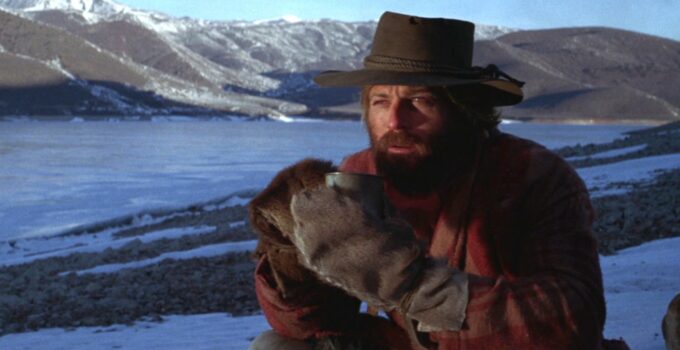
Despite facing skepticism and financial challenges, Redford’s decision to build a home at Sundance brought him a sense of peace and fulfillment. The experience of creating a place that blended with nature and offered solace from the outside world was a transformative journey for Redford, shaping his future endeavors at Sundance. When the winter snows arrived, we would boil water for cooking and bathing. Offers for films came in, but were ignored as his beard grew longer and he retreated into solitude.
After the completion of the A-frame house, he expressed his excitement about the three-level structure with exposed glass panels and rock work, located 45 miles from the nearest town at 8,000 feet altitude. He described the breathtaking view of the mountain peak and glacier, the abundant hunting opportunities, and the rich streams filled with rainbow trout.
Over the years, his connection to the place deepened as he acquired more land, fought against developers, and eventually established the Sundance Institute in 1981. This marked the beginning of his rootedness in the area, a commitment that he cherished.
When people referred to « Sundance, » they often meant the popular film festival held in Park City, Utah. However, for Redford, Sundance was the small ski resort near Mount Timpanogos in Provo Canyon. The story of how he discovered the resort became a myth over time, with details becoming blurred in retellings.
Despite the initial retreat to build his home, Redford’s career took off with success on Broadway. The development of Sundance faced financial struggles, leading Redford to invest his movie earnings into the property. He expanded the resort in an effort to prevent tract housing from encroaching on the mountain, but the financial burden persisted.
Ironically, Redford’s busy schedule kept him away from Sundance for much of the time. Despite his desire to settle there, he remained unsettled, traveling between New York, Los Angeles, and film locations. Like the Sundance Kid, he struggled with the idea of going straight, facing challenges and uncertainties along the way. Le regard de Butch dit « c’est la seule chose que je pensais que tu faisais bien et tu ne peux pas le faire. » Plus amusé qu’accusateur.
Garris commence à s’éloigner, dégoûté et en a fini avec eux, quand Sundance demande : « Puis-je bouger ? »
« Sérieusement, que veux-tu dire par bouger ? » répond Garris.
Soudain, Sundance s’accroupit, se penche, tire son arme et touche la pièce deux fois, la deuxième fois alors qu’elle vole en l’air.
« Je suis meilleur quand je bouge, » dit-il.
C’est un grand moment de cinéma. C’était aussi la méthode de travail de Redford. Le mouvement était sa façon habituelle d’être. Il conduisait vite. Il aimait courir cinq miles par jour et jouait constamment au tennis. Sa fille Amy, par exemple, attendait avec impatience l’énergie boostée quand il était à la maison à Sundance : les sports, les randonnées, toute l’action. Mary Tyler Moore avait un avis différent. Restant à Sundance après « Des gens comme les autres » et essayant de rester sobre après que l’alcoolisme l’ait presque tuée, Redford était juste trop. Tennis à 9h ? Natation à 11h ? Quoi ensuite ? Tir à l’arc ? Bob, pour elle, était comme un animateur de camp déchaîné, activité après activité.
Il apportait la même énergie sur les pistes. Bien qu’il n’ait appris à skier qu’en tant qu’adulte, et qu’il se soit entraîné et amélioré pour « La Descente Infernale », il skiait vite et en payait le prix avec des nez cassés et des clavicules fracturées. Il réalisait aussi des films rapidement. Pensez à la période assez ridicule, d’une période de moins de deux ans, de 1972 à 1974, où il a joué dans « Jeremiah Johnson », « Le Candidat », « Nos plus belles années », « L’Arnaque » et « Gatsby le Magnifique ». Il agissait même rapidement, « ne perdant pas de temps » comme l’a dit le réalisateur George Hill. Sur le tournage de « Les Hommes du Président », il s’impatientait avec Dustin Hoffman et Jason Robards, qui adoraient analyser et parler sans fin des personnages et de leur motivation. « Allons-y » était la devise de Bob. En même temps, il refusait de refaire une prise de la même manière. Il cherchait la spontanéité et avait une impatience envers la théorie – il aimait « faire ».
Son désir de s’enraciner entrait en conflit avec ce besoin de bouger. Les deux désirs étaient réels. Il aimait sa famille et essayait de créer un espace domestique de rêve à Sundance. Mais il était souvent absent. Il rêvait de paix, d’un endroit loin du monde ennuyeux, et il avait des moments de paix avec sa famille et dans la nature. Mais il serait difficile de le décrire comme serein. Ses personnages étaient inquiets, tout comme lui.
V.
Il y a beaucoup de choses que le jeune homme ne sait pas quand il regarde pour la première fois Timpanogos. Il n’a aucune idée de où sa vie le mènera. Si vous veniez du futur le rencontrer ce jour-là où il voit la montagne, et lui dire ce qui allait arriver, il rirait. Plus probablement, il penserait que vous êtes fou.
Quelle histoire étrange et remarquable vous pourriez lui raconter. Elle semblerait être une fiction ridicule. Vous pourriez lui faire savoir qu’il sera père, mari (deux fois), un symbole sexuel, un cowboy en herbe, un bandit séduisant à l’écran et parfois un peu geek en dehors. Qu’il montera en gloire en tant que la star de cinéma la plus célèbre d’Amérique, et l’une des personnes les plus célèbres du monde tout en essayant toujours de se retirer et de maintenir un certain sens de son authenticité. Que son amour pour cet endroit le conduira à le défendre, ce qui se répercutera sur l’amour et la défense de toute une région. Et qu’il ne se contentera pas de faire semblant de se battre comme le font beaucoup de célébrités, mais fera le travail ennuyeux qui doit être fait, faire pression sur les membres du Congrès, assister à des réunions.
Et tout cela sans même mentionner l’Institut Sundance et le Festival Sundance. Il ne sait pas encore qu’il aura la merveilleuse et grandiose idée de créer un espace, dans un monde de commercialisme écrasant, où de jeunes cinéastes pourront travailler protégés des griffes du marché, puis aider à créer une vitrine pour ce travail indépendant, et, même si cette vitrine devient quelque chose d’un monstre, incarnant en quelque sorte l’opposé de l’esprit dans lequel elle a été conçue, eh bien, cela ne diminuera pas l’impulsion initiale ni tout le bon travail qui se diffusera dans le monde grâce à cela. Le sien sera une tentative obstinée de lutter contre Hollywood, et sans cette obstination, rien de tout cela n’aurait été réalisé. Ah, et au fait, vous pourriez lui mentionner qu’il fera beaucoup de films, certains d’entre eux très bons.
Lorsqu’il se tient pour la première fois au pied de Timpanogos, il ne peut pas savoir les cadeaux que la montagne lui offrira. On pourrait soutenir que presque tout dans sa vie découlerait de cet endroit : l’art, la famille, la nature, l’activisme. Une grande partie de ce qu’il accomplira naîtra de cette première découverte marquante, le moment où un jeune homme qui veut être artiste, mais honnêtement ne sait pas vraiment ce qu’il veut être et ne prévoit surtout pas d’être acteur, un jeune homme qui se débat encore avec son père jugemental, un jeune homme confus sans idée de ce que le destin lui réserve et que j’appellerais accident, regarde en l’air et voit la montagne. Le contenu de l’article a été réécrit pour améliorer sa lisibilité et sa clarté.